
Vlaemsch: Visually striking, pensive, but over-stretched
- Janejira Matthews

- Oct 29, 2025
- 2 min read

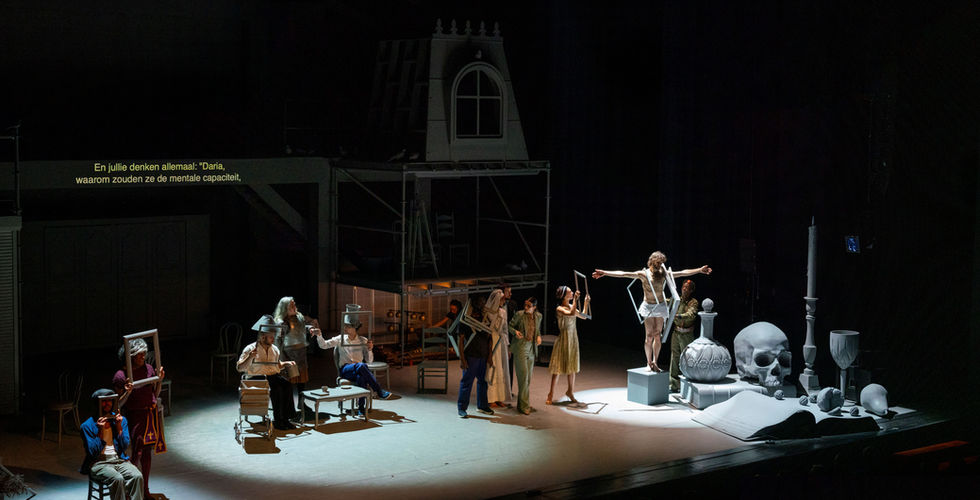


A world sculpted in greyscale, Sidi Larbi Cherkaoui’sVlaemsch (Chez Moi) - 'Vlaemsch' being an archaic spelling of 'Flemish' - dives into his Flemish roots, artistic legacy and surrounding prejudice. A large, cut-out mansion dominates the stage, looming over the dancers that slip into scenes painted by old masters or gliding and twitching through enigmatic solos. Endless characters are squeezed into this dreamhouse of a work: an older woman takes us through family portraits, the dancers clustered together in various poses each holding a picture frame; a frustrated artist (heels and short, bouffant hair) declaring “meh!” at scenes created by the dancers before tossing crumpled paper behind them; a lecturer analyses the faults of society. Each section blurs into the next, cramming a wealth of ideas and images that, whilst they resonate, can feel slightly unfocused at times.

Looking into the past, as well as into the present, Vlaemsch is shrouded in nostalgia. Much of the cultural heritage blended onto the stage reaches into the past: medieval music, much of it with Middle-Eastern roots, grounds Vlaemsch into an established history. Musicians appear on stage as much as the dancers, and with sculptures and continual references to art, what we see crosses beyond a group of moving bodies to a historical collage. Cherkaoui’s pride in Flemish heritage is clear in the appearance of Flemish spoken word, song and sentiment, accompanied by an acceptance of other influences in the diverse cast of dancers and their own practices feeding into the work. Yet, opposing what could be a peaceful and merely aesthetic veneer are human boundaries marking countries, generations and ideological differences.
A cardboard box, of the delivery sort, is alone on stage with one officious dancer. But not all is as it seems. Limbs begin to spill clumsily out of the box, two legs popping out in lifeless surprise. The official tries to stuff these disobedient appendages back in, but an arm appears, or another leg. Eventually, the dancer flips out of the box, a robotic corpse all joints and awkwardness. Relevant to current times, the treatment of someone to be shipped from one place to another without any consideration for their humanity, other than to be boxed up and labelled, is a blunt and unforgiving metaphor despite its humorous disguise. Indeed, Vlaemsch is set with many moments where we view British society in the guise of Flanders from the outside. A tour bus with a knowledgeable but fed-up tour guide, ignored by rowdy tourists, does her best to introduce Flemish architecture, landmarks and statues - St George’s flag has been graffitied on the set. Occasionally verging on becoming irritatingly preachy, Vlaemsch just about succeeds in pulling back and retaining a layer of subtlety. Its many arguments interlace, leaving strong images but an odd mental fatigue.


